
Start with the work the business needs
StarProfits AI combines a branded review kit, prospecting material, review requests, reply drafts and reporting in its published offer. That combination may suit an agency delivering a service to several businesses. A single owner may need a smaller set of tasks.
List the jobs first. Common examples are sharing the correct review destination, inviting genuine customers, replying carefully and tracking unresolved feedback. Compare the advertised StarProfits AI workflow with your existing process before assigning value to additional features.
A direct Google Business Profile workflow
Google’s own guidance describes sharing a review link or QR code and replying to reviews. An owner who can handle those tasks consistently may have a practical starting point within the tools already used to manage the business listing.
This approach asks the owner to organize the surrounding process, including request timing, permissions and follow-through. It can suit a business with a manageable flow of customers and someone responsible for the listing. Evaluate the time spent, rather than assuming automation is valuable for every business.
A dedicated review-management platform
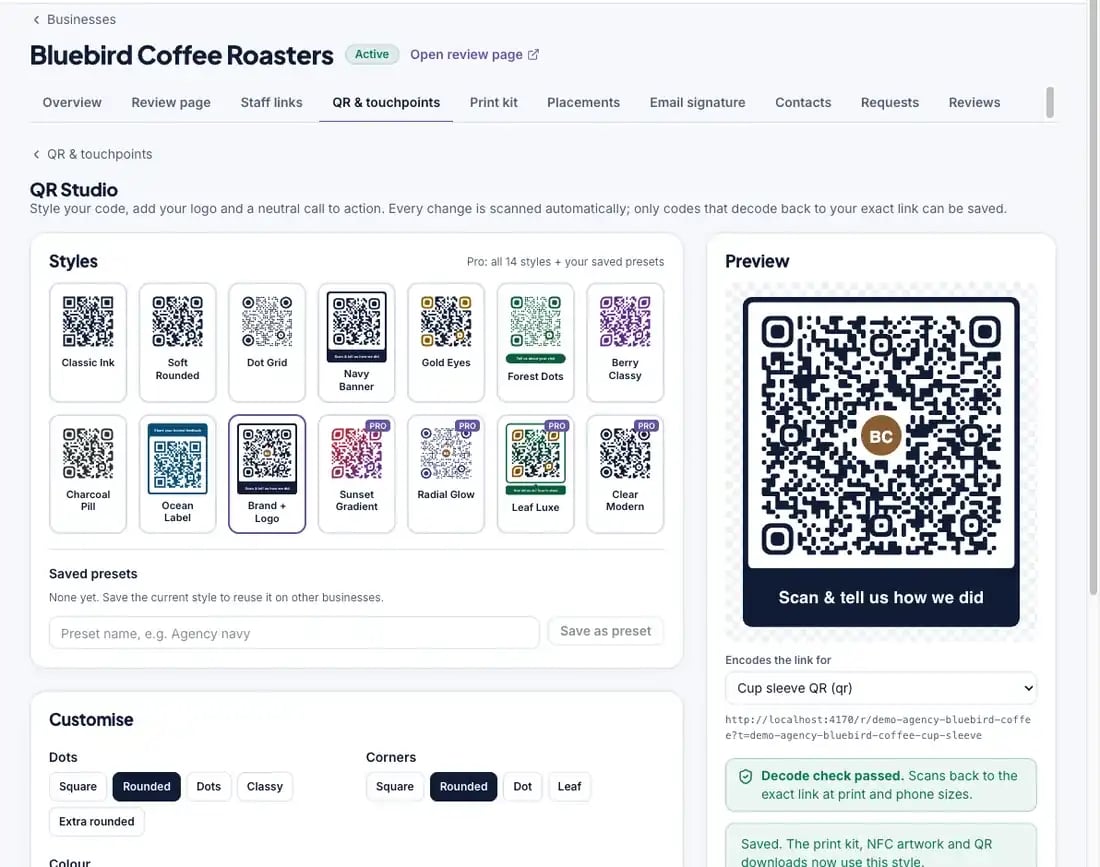
A focused review platform is worth evaluating when the main need is a repeatable request and response process. Build a comparison around the review journey, supported locations, permissions, sending limits, exports and reporting definitions. Check a current demonstration and the applicable terms for each option.
For StarProfits AI, inspect the rating-adaptive page behavior and messaging requirements closely. The reviewed seller material says low scores open a private feedback box first while retaining a public option. Decide how the actual customer journey fits the business’s responsibilities under the destination platform’s rules.
An existing CRM or customer-service workflow
A business that already maintains customer records and communication workflows should check whether a separate review tool adds useful work or repeats an existing process. Investigate whether the current system can handle permissions, customer segments and request timing, then identify any remaining gap.
The StarProfits AI overview advertises an API and webhooks, but that does not establish a native integration with every CRM. Verify the exact connection, maintenance effort and failure handling before committing to an automation. The integration guide lists the documentation and permission questions to resolve.
Compare approaches by the work you will actually perform
| Approach | Work to assess | Potential reason to choose it |
|---|---|---|
| Direct review link and owner routine | Manual requests, replies and follow-up | A small business with manageable volume and a responsible owner |
| Existing CRM workflow | Current sending tools, permissions and missing review steps | Customer records and communication already live in one system |
| Dedicated review platform | Request journey, approvals, locations and reports | A repeatable review operation is the main requirement |
| StarProfits AI toolkit | Business research, kit generation, agency delivery and feedback work | The connected kit and client-facing materials solve real recurring tasks |
The table describes evaluation categories. It does not claim that every CRM or dedicated platform includes the same features. Confirm the actual capabilities and charges of whichever options you shortlist. The StarProfits AI trade-off guide helps define which of its documented strengths matter to your case.
Run the same scenario through each shortlisted option
Choose one business and describe a complete task: send an appropriate request, inspect the customer destination, approve a reply and explain the activity to the owner. Evaluate the same scenario in each option. A tool that looks cheaper in a price table may require extra manual steps, while a larger suite may duplicate work you already perform reliably.
For an agency, add a client handoff to the comparison. Can the owner understand the proposed page, approve wording and see the intended report? Ask how branding, business allowances and user access affect that process. For a single-location owner, give more weight to the daily routine than to prospecting and resale features.
Record what is verified, what is an optional upgrade and what remains unanswered. Do not score a product positively for an integration you have only assumed exists. The integration guide lists the questions behind APIs and connectors, and the setup checklist gives practical criteria for a working customer journey.
Include switching and exit work in the comparison
Review material can become part of the business’s daily operations. Before switching tools, list the QR codes, printed placements, customer links, domain connections and staff instructions that would need to change. A new platform is easier to assess when the owner understands what would happen to those existing touchpoints.
Ask about exports, page ownership, access after cancellation and the treatment of historical reports. Those questions apply to StarProfits AI and to alternatives. The reviewed StarProfits AI overview does not document every exit detail, so obtain the applicable terms rather than assuming that a one-time offer guarantees a specific lifetime of service or a particular migration process.
Compare the total recurring effort as well as the purchase amount. The pricing guide separates advertised software charges from messaging and operating costs. The commercial-license guide covers the responsibilities involved when clients depend on your setup. A sensible choice is the approach that fits the work, ownership and support you can maintain.
Compare the complete operating cost
| Question | Why it affects the decision |
|---|---|
| Who owns the routine? | Someone must handle requests, replies and unresolved feedback. |
| What is charged separately? | Messaging, software and implementation can have separate costs. |
| Can the client leave? | Check export, domain ownership and cancellation terms. |
| What does the report prove? | Use consistent definitions for activity and outcomes. |
Compare the dated StarProfits AI offers with the verified cost and terms of each alternative you actually consider. Our full review provides the product assessment. This framework does not rank untested competing vendors or assume a particular tool will improve ratings, rankings or sales.
Common questions
Can a business ask for Google reviews without a separate review platform?
Google’s guidance describes sharing a review link or QR code and managing replies through Business Profile. The surrounding routine still needs a responsible owner.
Does the StarProfits AI API guarantee compatibility with my CRM?
An advertised API or webhook feature does not confirm a native integration with a particular CRM. Check the exact connection and current documentation.
How should an existing CRM be compared with StarProfits AI?
Run one complete scenario through both approaches: request, destination, reply approval and report. Identify which tasks the CRM already handles reliably and which require extra work. Compare verified limits, cost and ownership rather than assuming that an advertised API creates a native connection or removes duplicate processes.
What should a single-location business prioritize?
Start with a correct review destination, a repeatable invitation routine and someone responsible for replies and feedback. Give extra weight to the steps staff will perform regularly. Prospecting, multiple client workspaces and reseller features may be less relevant when the owner only needs to maintain one business’s review process.
Sources and verification
Product facts and launch offers checked on November 8, 2026. Seller demonstrations and published terms support the factual descriptions. Practical checklists are our editorial analysis.