
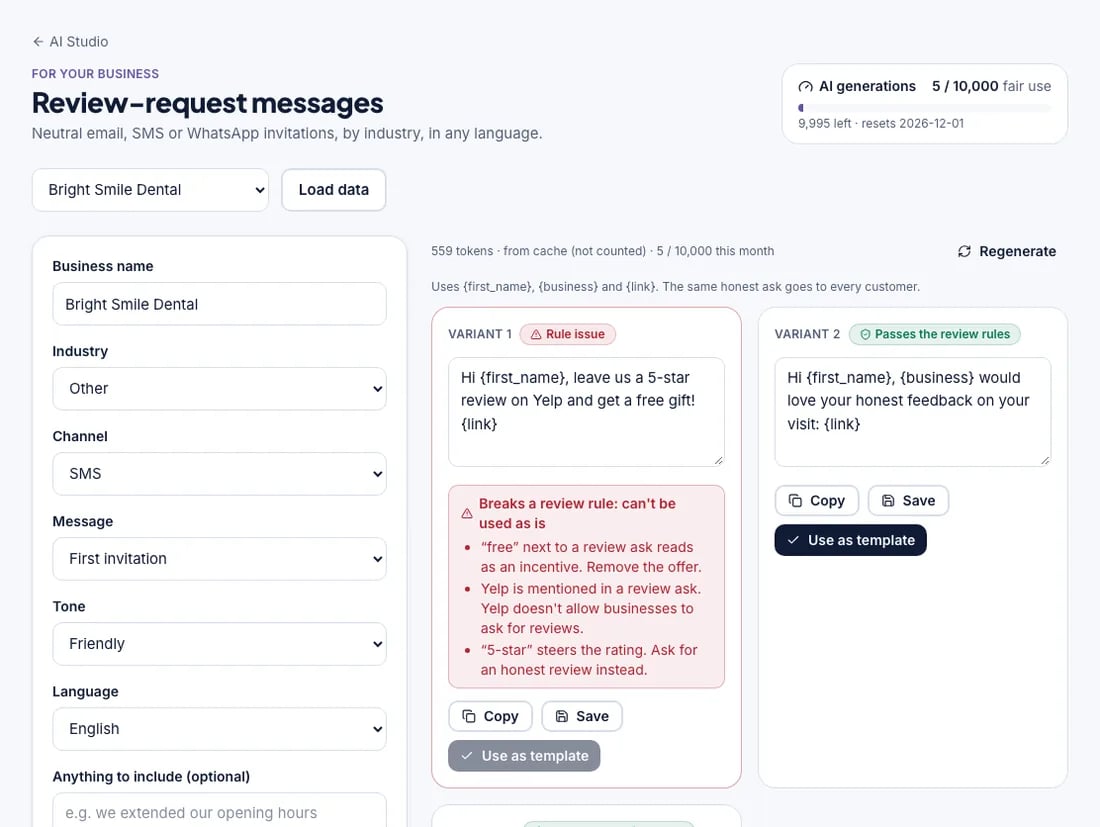
From a draft to a public reply
The seller describes a short reply workflow. AI prepares a draft, one tap copies it and opens the customer review in Google, then the operator pastes and posts. A mark-as-posted action keeps track of completed work. This distinction matters when estimating the time and permissions required for client service.
The main StarProfits AI review covers the broader product. For reply management, start by deciding who owns the response and which account is authorized to publish it.
Review the content before publishing
A useful reply acknowledges the actual feedback without filling gaps with invented details. Compare the draft with the original review and remove assumptions about the transaction, the customer’s identity or a promised remedy. Keep customer records and sensitive information out of a public response.
- Does the reply accurately reflect what the customer wrote?
- Does it make a promise the owner has authorized?
- Could it expose private account, financial or health information?
- Does the tone suit this business and the specific concern?
- Is any invitation to contact the owner a working route?
Those are editorial approval questions. They are especially relevant when an agency drafts in the voice of several businesses.
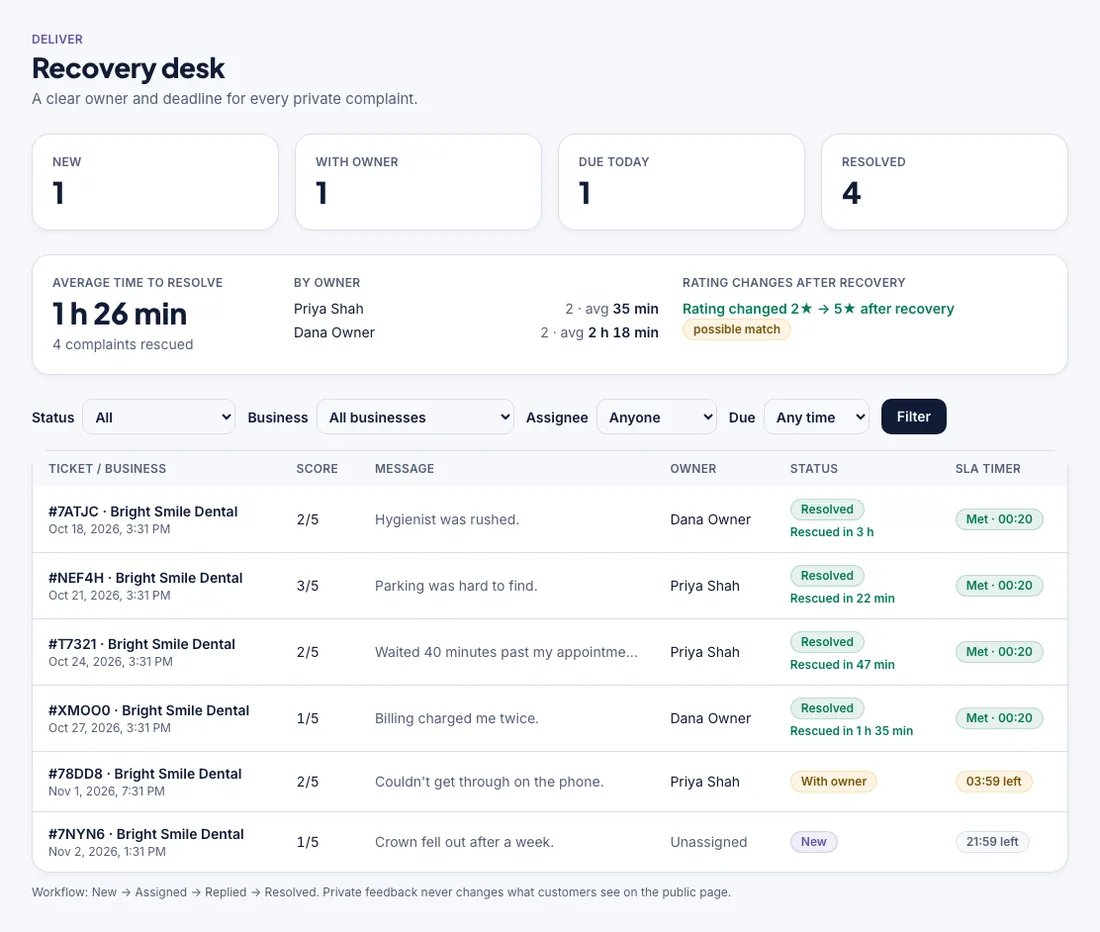
The Google account step
Google’s own help explains that a business must be verified before it can reply through its Business Profile. Its instructions place publication in the review interface. Ensure the owner or authorized operator can access the correct profile before assigning a reply task.
After publication, Google may review the response against its policies. Keep a simple record of what was posted and when. The software’s completion marker should reflect the actual state, so a copied draft does not accidentally become a completed-response count. See Google’s review-management instructions.
What the advertised Pro rules add
The public feature notes say Pro adds auto-reply rules and that negative reviews still require approval. The same materials direct promoters to describe the copy, open, paste and post workflow accurately. They do not provide enough detail here to assume unattended publication to Google.
If rule-based reply handling is essential, ask the seller to demonstrate the exact trigger, approval queue, sending or posting action, exclusions and activity log in the package you will buy. The pricing guide lists the advertised $67 Pro upgrade and other package dependencies.
How to evaluate a reply draft without inventing facts
A useful reply acknowledges what the customer actually wrote, uses the business’s voice and avoids adding an unverified account of the visit. For an illustrative positive review mentioning a helpful staff member, a short response can thank the customer and recognize that feedback. It should not add a purchase, treatment or personal detail absent from the source.
A critical review needs more care. Check whether the draft makes promises, admits facts the owner has not confirmed or discusses private customer information. A restrained acknowledgment and an appropriate private contact route may be more suitable than a detailed argument. The person authorized by the business should decide the final wording.
This is an editorial review method, not a transcript of a tested account. The software is described as generating a draft; the business remains responsible for what it posts. The customer-feedback guide explains the routes into that conversation, and the privacy checklist covers information that should not be copied into connected prompts unnecessarily.
Create an approval routine a small team can maintain
Agree who can prepare a draft, who confirms the facts and who publishes the reply. For a single owner those may be the same person. For an agency, the client may need to approve wording before an operator opens the Google review. A clear handoff avoids duplicate responses or an unreviewed draft being mistaken for a final answer.
Check the original review immediately before posting. A draft prepared earlier may no longer match an edited review or a changed service situation. After posting, confirm the correct business and review received the response. The seller’s “mark as posted” step is a workflow record; it should not replace checking what appears publicly.
Use a simple exception routine for sensitive, disputed or unusually specific feedback. Ask the owner for a decision instead of trying to force every case into a reusable template. The agency delivery guide helps define who speaks for the business, while the reporting article explains how reply work can be described without overstating outcomes.
Questions to settle before using Pro reply rules
The seller associates auto-reply rules with Pro while saying negative feedback still needs approval. The overview does not establish every trigger, posting mechanism or failure state. Ask for a demonstration of the exact rule you want to use and distinguish preparing a draft from publishing a response to Google.
- Which reviews qualify for the rule, and what prevents a repeat action?
- Does the rule generate wording, queue an approval or perform a separate action?
- Who sees a blocked or failed step?
- Can an operator pause the rule and review queued work?
- What happens when a review is edited after a draft is prepared?
These questions are particularly important if you plan to sell an automated service. Describe the verified workflow in the service scope and keep manual approval where the exact behavior is unresolved. Compare the Pro package terms with the job you need done, rather than assuming that an automation label removes the need for an accountable publisher.
Create a repeatable team process
Set a review cadence and agree which issues require direct owner input. A complaint about an appointment, disputed payment or staff conduct may need checking outside the review platform before a response is appropriate. Route the concern to the responsible person, then approve wording grounded in confirmed facts.
The advertised Claude and ChatGPT connector can help list unanswered reviews and request drafts. Access depends on your external provider plan and secure sign-in. The integration guide explains the access questions, while the reporting guide helps separate drafted and completed work. Keep the customer feedback process open to honest experiences at every rating.
Common questions
Does StarProfits AI publish Google replies by itself?
The verified public description says AI drafts the reply, a tap copies it and opens Google, and the operator pastes and posts. Ask the seller to clarify any advertised rules before assuming unattended publication.
Do negative replies need approval?
The seller’s Pro feature note says negative reviews still require approval. Set a clear responsible approver for each business.
Can Claude or ChatGPT help with replies?
The seller advertises a connector for finding unanswered reviews and drafting responses. Your plan with the external provider and the connection’s access permissions matter.
Does marking a reply as posted prove it is public?
The seller describes a mark-as-posted workflow step. Treat that as a work record and check the actual Google review to confirm the intended response appears for the correct business. The standard documented process still requires the user to paste and post after the software prepares and copies the draft.
What should be checked in a negative-review draft?
Check facts, tone, promises and private information. The draft should not invent an account of the visit or commit the business to a remedy the owner has not approved. Ask the authorized person to decide sensitive or disputed cases instead of treating a reusable response template as sufficient for every situation.
Sources and verification
Product facts and launch offers checked on November 8, 2026. Seller demonstrations and published terms support the factual descriptions. Practical checklists are our editorial analysis.